
South Windsor City Directory Shelves
The South Windsor city directory trail is regional. The Connecticut State Library catalog leads identify Hartford suburban volumes that include South Windsor, while the digitized 1901 Geer's item supplies a readable sample. Exact call numbers, scan status, and a final printed year were not verified in a static export. Each row below is therefore a collection lead to confirm volume by volume, not a claim that every year lists every South Windsor road.
| Collection | Years | Where Held | Access |
|---|---|---|---|
| Dau's blue book for Hartford, regional South Windsor leads | 1907, 1909, 1911, 1913, 1915, 1918, 1919, 1922 | Connecticut State Library catalog and holdings | Request the volume and verify the suburban list |
| Hartford suburban directory | 1905-1906 | Connecticut State Library | Regional name and address search; shelf details need confirmation |
| Hartford little suburban directory | 1913, 1915 | Connecticut State Library | Check each edition for South Windsor inclusion |
| Hartford house directory and family address book | 1906 | Connecticut State Library | Household and address lead; exact pages need confirmation |
| 1901 Geer's Hartford directory | 1901 | Internet Archive digitization | Free page images and OCR, with image verification needed |
| Reverse or criss-cross directory format | Around 1920 onward | State Library, HeritageQuest, regional shelves | Name-to-address and street-to-name searching |
| South Windsor High School yearbooks | Multiple annual volumes; exact continuous run unknown | Wood Memorial and Internet Archive links | Browse page images and verify the year |
| Wood Memorial town reports and local archives | 1876 and 1895 reports, broader local holdings | 783 Main Street, South Windsor | Appointment and archive inquiry |
The gaps matter. No complete South Windsor-specific directory shelf list, verified last printed year, or exact scan and microfilm status was located. A regional title should be read for its geographic note before assuming that a South Windsor name, street, or household appears in the edition.
South Windsor State Library Search Route
The Connecticut State Library directory guide recommends catalog searches using a town name and “Conn. city directory.” Search both South Windsor and regional Hartford or East Windsor terms. South Windsor was set off from East Windsor in 1845, and older suburban publishers grouped nearby places in ways that do not match a modern town filter.
The guide explains that early volumes can list people, addresses, and occupations, while later volumes may add street maps, public buildings, town offices, schools, societies, notices, and business entries. A South Windsor city directory search should start with the catalog, then move to the volume or scan. Ask the reference desk for the exact shelf call number, geographic coverage, and whether the book is on site, on microfilm, or available in another format.
The State Library's licensed HeritageQuest route can support remote directory and census browsing with a State Library card or login. It is not an unrestricted public page. The State Archives reading room in Hartford is another route for older guides and finding aids, though compact-shelving work in 2026 can make some off-site groups unavailable.
The State Library directory guide shows the catalog and HeritageQuest path for a South Windsor catalog search.
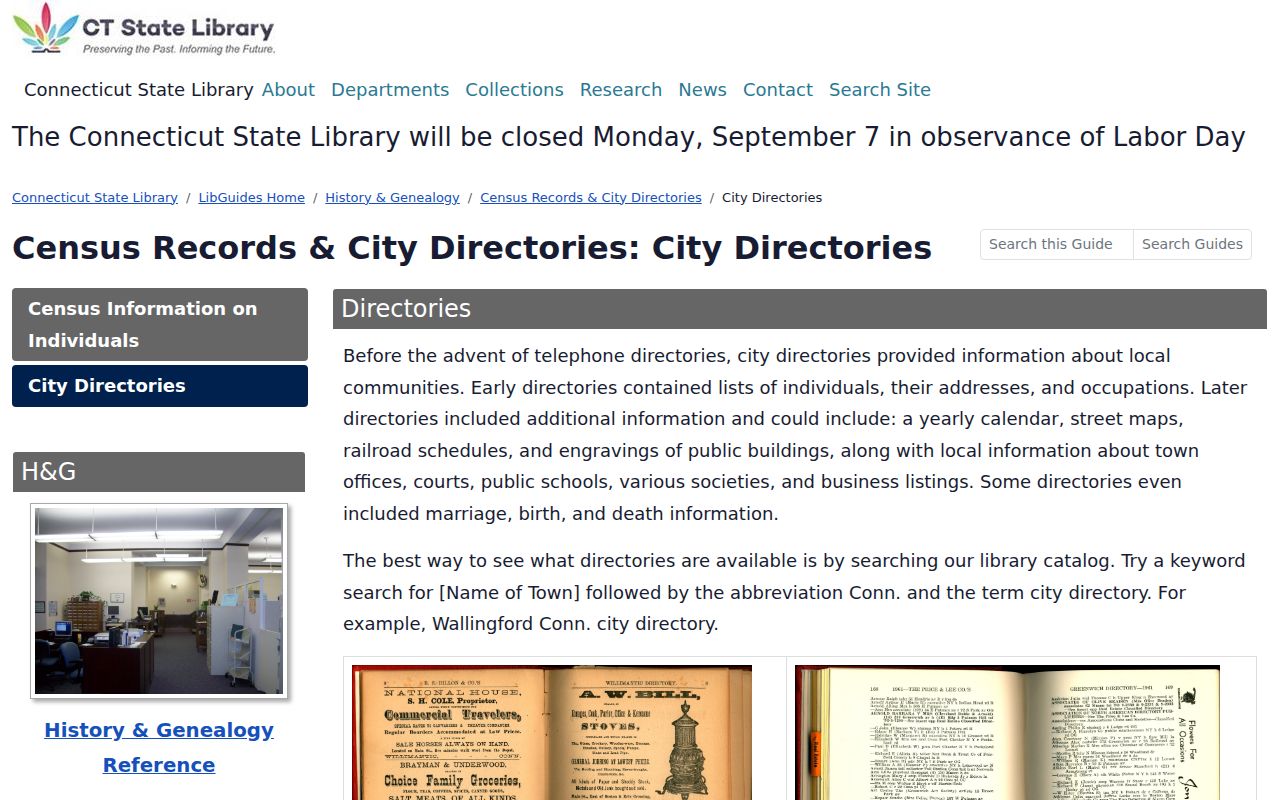
Use the guide to identify a collection, then record the edition, page, place label, and access route that produced the name.
Reading a South Windsor City Directory
A directory entry is a compact set of clues. The 1901 Geer's Hartford volume includes the OCR text “Ahern Thomas, South Windsor,” but the surrounding grammar shows why a page image matters. A printed entry may combine a name, occupation or trade, workplace, street address, and an h. or b. notation for home or boarding. It may identify South Windsor as a town label without giving a full modern street address.
The sample has no parcel ID, ZIP, unit, or geocode. OCR can drop punctuation, initials, and spacing. Read the page image, copy the exact spelling, and note whether the line describes a residence, a place of trade, a boarder, or a town-level reference. Do not turn an uncertain scan into a precise current location.
| Name | Printed surname and given name, with initials or spelling variants preserved. |
|---|---|
| Occupation | Trade or role as printed in that edition. |
| Spouse or household note | Spouse, widow, or family notation when the volume includes it. |
| Address | House number, street, town, or a regional place label. |
| Owner or renter mark | A symbol or notation only where that specific volume uses one; do not assume it appears. |
| Home or boarding mark | h. or b. may distinguish a home line from a boarding reference. |
- Criss-cross directory
- A reverse section arranged by street and number so an address can lead to a name.
- Householder index
- An alphabetical route to a head of household or named resident, subject to the edition's coverage.
- Abbreviation key
- The volume's explanation of short forms and symbols. Find it before interpreting h., b., widow, or trade marks.
A household clue becomes stronger when the same spelling, address, spouse note, or trade appears in another edition or census year.
The digitized Geer's page is the source for the observed South Windsor OCR phrase.
Inspect the printed page beside the OCR so a regional label is not mistaken for a full street entry.
South Windsor Reverse and Criss-Cross Logic
A regional directory around 1920 can work in two directions. The alphabetical section starts with a person and may show an address. The street section starts with a road and number and may show the person at that location. The two halves answer different questions, especially when the deed owner is absent, a boarder is present, or a family has moved between editions.
Search the old and new street spellings, nearby numbers, and local place names. The State Library guide describes the format as a combined name and street method, but the exact South Windsor run is not verified. If the street section is missing, a census, town report, cemetery record, obituary, deed, or archive file can supply the next dated check.
Tracing South Windsor Households
Trace a South Windsor household by holding the edition year beside each name and address. A disappearance can mean a move, death, omission, a changed town label, or a gap in the surviving run. Use the following sequence, then compare the result with a separate record.
- Find the surname in the alphabetical section and copy spelling, initials, spouse or widow note, trade, town, and street.
- Open the street section in the same or later volume. Test old and new street spellings and nearby numbers.
- Repeat across the available editions, marking a move, a new household member, a boarder, or a changed place label.
- Pair the directory year with a federal census year. Use the household, age, relationship, birthplace, and occupation fields to test the match.
- Close the trail with a deed, death or marriage certificate, obituary, cemetery record, probate file, yearbook, or town report.
The State Library guide covers federal census collections from 1790 through 1950, with the 72-year release rule. A directory is a snapshot. A census is a decade marker. A deed or vital record can anchor a specific event between them.
South Windsor Census and Boundary Numbers
The federal census from 1790-1950 is a major companion to the South Windsor directory shelf, and 1950 is the latest released federal census in the research period. The State Library guide notes that 1850 is the first census to name and age every household member. South Windsor's historic-resource survey identifies 1850 as the first federal census year in which South Windsor was counted separately from East Windsor.
The same survey reports 494 male occupation returns in 1850: 340 farmers and farm laborers, 39 general laborers, 36 woodworkers, 22 joiners, and seven each millwrights and wheelwrights. These numbers are a useful local scale marker. A directory entry with a farm or trade clue can be compared with that census context, but the number is not a count of all residents or all occupations.
Before the 1845 municipal split, search Windsor and East Windsor as well as South Windsor. Church registers, cemetery records, town histories, and regional directories may preserve the older label. Boundary awareness is part of the name search, not a reason to discard a near match.
Wood Memorial Archives for South Windsor
Wood Memorial archives at 783 Main Street are the strongest local history route for a South Windsor city directory clue that needs more context. The holdings include town records, farm and business papers, family letters and Bibles, oral histories, journals, genealogical files, photographs, maps, architectural drawings, school yearbooks, unpublished writings, and historical publications. Physical research is by appointment.
Wood Memorial also spotlights South Windsor town reports from 1876 and 1895. Those reports can supply selectmen, road, school, finance, and civic names for a date-specific snapshot. They do not replace a complete resident roll. PastPerfect and Connecticut's Archives Online are linked collection tools, but the unattended research did not verify their live fields or sample item display.
The library and museum's public page lists 860-289-1783 and public hours, with a 2026 HVAC, waterproofing, and front-step repair or reopening notice. Verify access before travel and ask staff whether a directory, yearbook, town report, or family file is available for the date in question.
The archive page connects local manuscript and town-record holdings to a physical research appointment, while the 1876 and 1895 report dates provide the stronger record-specific clues.
South Windsor Historical Society School House
The South Windsor Historical Society School House at 771 Ellington Road is open Thursdays from 10 a.m. to 1 p.m., with contact at 860-291-9958. Its public description names local artifacts, books, clothing, manuscripts, oral histories, relics, genealogical data, and community memory. Those materials can help explain an old South Windsor city directory entry, especially when a family name appears in a regional volume without a full street address.
The Society's exact directory run, obituary card index, funeral-home files, and published fee schedule were not located. Do not promise a searchable name index. Call before visiting, identify the person or road and the approximate year, and ask whether the material is a public collection, an appointment item, or a referral to another repository.
The South Windsor Historical Society page is the source for the School House location and Thursday access information.
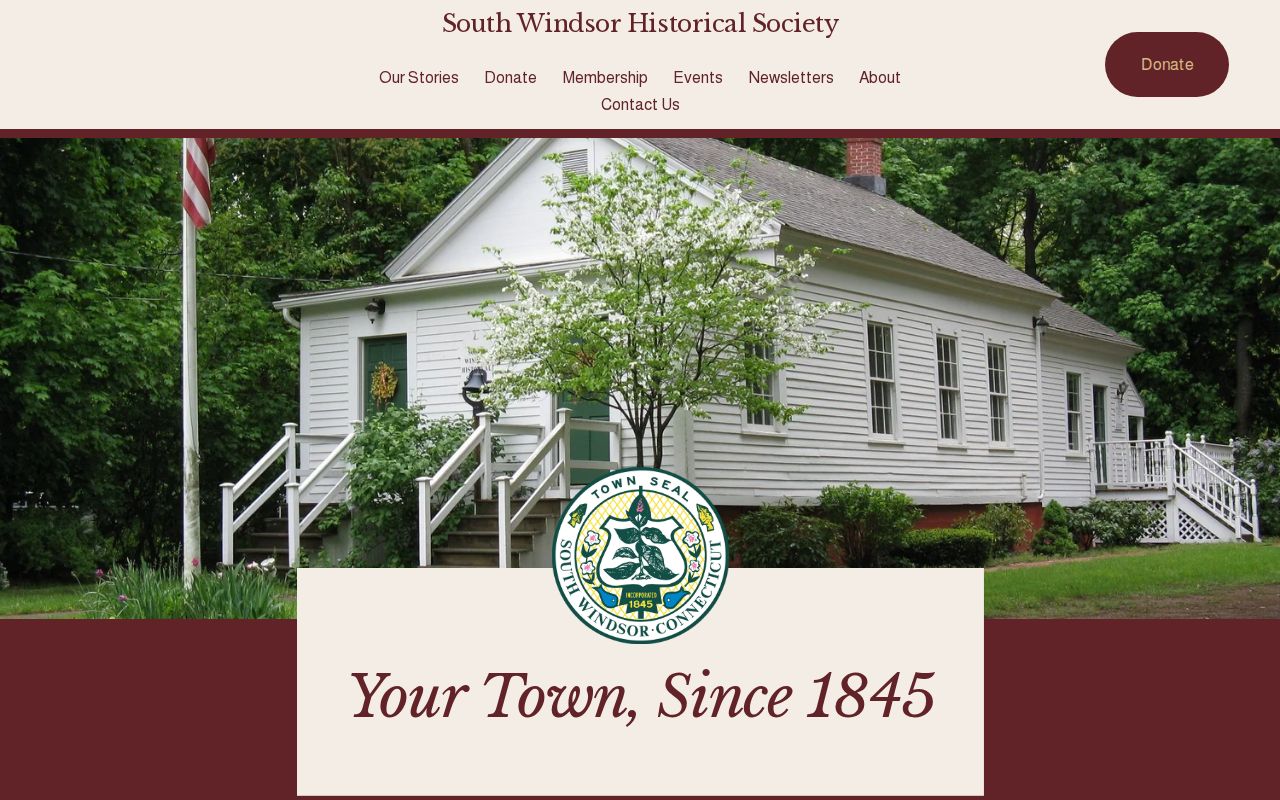
Use the local contact as a collection lead, not as proof that a particular person or year is indexed.
South Windsor Yearbooks and Local Gaps
Yearbooks add class, club, family, photograph, and school-era address clues to a South Windsor city directory search. Wood Memorial highlights South Windsor High School yearbooks, and the research inventory identifies digitized Ellsworth Memorial High School and South Windsor High School material. The exact continuous annual run is unknown, so a missing year may be a collection gap rather than evidence that no book existed.
The South Windsor Public Library at 1550 Sullivan Avenue confirms the municipal library but does not publish a complete local-history room, newspaper, obituary, reverse-directory, or microfilm inventory. The Connecticut Digital Archive can be searched with South Windsor title and geographic terms. The exact local obituary index and newspaper run were not verified in official pages, so request the title and date range before relying on an index.
Church records, cemetery registers, town reports, regional historical societies, and State Library guides can bridge a gap. Keep the town label, edition year, page number, and collection holder with each clue.
South Windsor City Directory Timeline
Several dates make a useful South Windsor city directory timeline. They mark changes in geography, record format, and access rather than a single uninterrupted publication run. The last printed South Windsor-specific year remains unverified.
| 1845 | South Windsor is set off from East Windsor; older people and parcels may use Windsor or East Windsor labels. |
|---|---|
| 1850 | First separate South Windsor federal census count identified by the historic survey; occupation returns provide local context. |
| 1901 | Digitized Geer's Hartford directory includes the OCR phrase “Ahern Thomas, South Windsor.” |
| 1905-1906 | Hartford suburban directory lead; verify South Windsor pages in each volume. |
| 1907-1922 | Dau's blue book regional leads for the listed years, including South Windsor references. |
| Around 1920 | State Library guide describes the alphabetical name and street-number reverse format. |
| 1950 | Latest released federal census in the research period, paired with surviving directory editions. |
| 2026 | Wood Memorial repair notice and State Library access changes make a call or appointment prudent. |
Using South Windsor City Directories With Care
A South Windsor city directory is a historical snapshot. It can suggest a household, address, trade, school link, or move, but it does not establish a present-day residence. Confirm a name with a census, deed, vital record, obituary, probate file, cemetery record, or archive item that fits the same date and place.
For a modern name check, move to the South Windsor Resident Lookup workflow. For an address-keyed parcel, owner, deed, permit, or voter trail, use the South Windsor Street Directory. The historical volume remains useful when it supplies the missing year, old place label, or person-to-address bridge.
Record uncertainty plainly. OCR may be wrong, a regional title may omit a road, a yearbook run may have gaps, and a town boundary may have changed the index name. Good directory work keeps the printed page, edition, source holder, and next verification step together.